
Conservative Party of Canada

Your MP at Work

Here in Canada’s Innovation Capital, we must strengthen our economic momentum to ensure…

Facebook · November 28, 2025

Here in Canada’s Innovation Capital, we must strengthen our economic momentum to ensure…Watch the video on Facebook
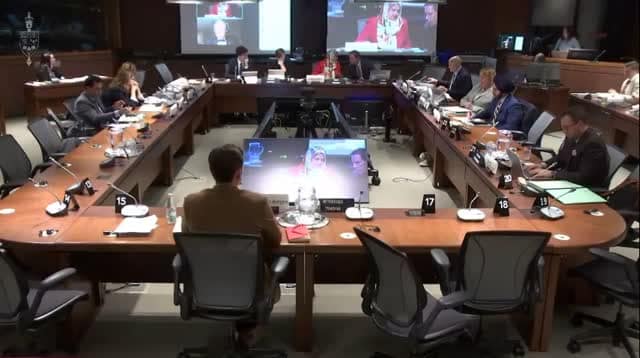
Here in Canada’s Innovation Capital, we must strengthen our economic momentum to ensure that Waterloo Region continues to lead. In committee, we heard troubling evidence that liberal policies like high taxes, excessive regulatory burdens, and lack of incentives for venture capital investment, are driving economic opportunity out of our region. That’s not just a missed chance at growth, it’s a risk to our future. #kitchener #innovation #community
What Kelly says in this video

Automatic transcript; it may contain small errors.

My questions are for you Mr. Virgin. Today as MP for Kitchener Centre, Canada's Innovation Capital, something you said to me really stood out today. You talked about IntelliJoint surgical, which comes from my home riding, being an innovative joint replacement technology, but they can't monetize. They're having trouble scaling because of red tape bureaucracy. It's hard to scale here in Canada. Also there was an article that came out today from CTV that said Warren Love Lovely, Managing Director with National Bank Financial, told B&M Bloomberg, the private sector has already lost confidence in the federal government and this country is dependent on the US. Current policy in the past 10 years have not been in the form to create innovation and create technology in Canada and we've lost investor confidence in this country and this has been over the past 10 years. To me this is a policy problem, it's a bureaucracy problem and you even said it's not something to throw money at, it's how do we create investment? So to you, policy, what can we do to create investment here in Canada and support our innovation and technology sector? Yeah, so this really is about an orientation. It's about how we think about how we support the innovation economy and I'll break it down kind of as most simplistically as I can and it sounds very simple, but at the end of the day, you know, when we look at public policy, is it generating IP, right? Meaning, you know, is the R&D that we're spending money on creating the intellectual property behind it in order for us to monetize it, right? And then the second question is, is the public policy that we're implementing helping to commercialize that IP that's being generated here in Canada? And then the third piece is, are we able to retain and keep that IP that we're generating here in the country? And so when you begin to orientate all of your public policy around that type of narrative, it begins to correct itself. So let's take an example like Shred, you know, it's roughly a four billion dollar a year program. Turns out that about 50% of every Shred dollar goes towards companies that claim to be Canadian in name only, meaning that we are subsidizing large foreign multinationals in a space where unemployment is effectively zero. At some point, that's just philanthropy. Huawei received a hundred million dollars in Shred. You know, not in one year, not not too long ago, right? Meaning that we had already banned its technology from Canadians using. Yes, we call those negative spillover effects. So not only are we subsidizing foreign firms, but also we are depriving our own domestic technology companies of talent. Let's take in the city, you know, Ericsson, right? They were given 79 million dollars through SIF, right? That is money that's going to help to support a foreign firm that's hiring here in Ottawa in a sector where unemployment is effectively zero. What does that do to the labor market? It makes it more difficult for domestic firms to hire because of these types of subsidies. So when we think about the innovation economy, we've got to think about how are we orientating to support domestic firms so that they can scale, grow and create wealth and prosperity. This is what all open small economies do. This is what they do in Denmark. This is what they do in South Korea. This is what they do in Japan. This is what they do in the United States as well. And it's all around IP ownership. And so I just I also want to clarify something you said is that you warned the government that the EV current policy was just job supportive and not technology to technology supportive and owning the intellectual property. So to me, that means that 31.4 billion dollars that have gone to committed dollars to the EV. We're losing the jobs and we've lost the IP. Can you verify that? So just to just to be clear, the position that you know we as an organization have taken is that by funding and supporting that type of economic development, it's not an innovation strategy. And so when the government at the time was saying whether that be both provincially or federally that it was an innovation strategy, we were really clear in saying that no, at the end of the day, who owns the IP that is creating those automobiles, whether it be through software and the technology or the actual EV batteries themselves. And the argument that we really put forward is that if Canada is going to actually benefit from the creation of these types of subsidies, how are we getting into the value chain? So is there ways for us to imbue our technology through public policy into those types of vehicles being made? Sorry for interrupting. MPD Rider time is up and we will end this panel with the MP Noor Mohammad for five minutes. Please go ahead.
More of Kelly's work

Facebook · November 27, 2025

The government says it will ‘spend less to invest more.’ But for families in Kitchener, that’s just words. Day-to-day costs are still soaring. Fiscal discipline should mean value for money, not inflationary spending that causes line ups at food banks. #kitchener #affordability… Read more

#groceries

House of Commons · November 27, 2025

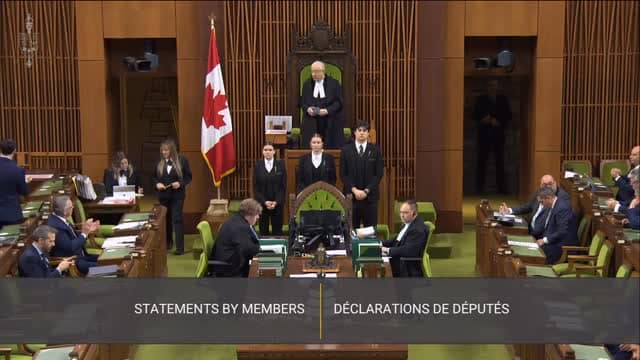
House of Commons: Government Orders — Budget Implementation Act, No. 1

Mr. Speaker, my colleague is right that this is a nationwide crisis. This is not just on my doorstep; it is on the doorstep of every single of us sitting in this House. When I was speaking with people when I was door knocking in my community, I do not think there was one family … Read more

I talked to that was not affected, either directly or indirectly, by the drug crisis. That is just in my community. I know that every single one of the seats in this House represents communities that are the same. We need to start doing something about this.

House of Commons · November 27, 2025

House of Commons: Government Orders — Budget Implementation Act, No. 1

Mr. Speaker, it was more than five years ago that the federal government launched its so-called safe supply. It was more than five years ago that it decided the answer to this growing drug crisis was to use federal taxpayer dollars to expand access to hard drugs, not treatment, n… Read more

ot recovery and not healing, just drugs. After a half a decade of chaos and heartbreak and $1 billion spent, what did the Liberals decide to do? In this budget, they chose to walk away. They chose to let mental health and addiction support funding expire, with no plan to renew it, no plan to replace it and no plan to help Canadians who are living through the consequences of the policies the Liberals championed. They are passing the responsibility to the provinces and municipalities, claiming it is not their jurisdiction. They should have had that same mindset before starting the safe supply experiment. They are pretending their decisions had nothing to do with the crisis Canadians are facing today. The government set fire to the barn, and now it is walking away hoping for someone else to put out the flames. The human toll of this drug crisis is being borne in large part by those we ask to save lives: our first responders. Recent reporting from CityNews shows the scale of what they are facing. The Vancouver Fire Rescue Services recently answered 54 overdose incidents in one day, the highest number of overdose responses ever recorded by that department. These are not rare, isolated events. In 2024, the average was between 20 and 25 daily overdose calls. In the Waterloo region, we just had to put out an overdose safety awareness alert this week. Meanwhile, an article from Canadian Affairs showcases what paramedics, firefighters and other frontline workers, like our nurses, are describing as their mental health and moral injury trauma, not from overdoses but from the endless cycle of drug-related emergencies they are powerless to resolve. One paramedic candidly described attending calls day after day for the same individuals, often without any resources to offer any long-term help. These are not merely medical emergencies; these are social emergencies rooted in addiction, homelessness and untreated mental illness, yet first responders regularly arrive at scenes where there is nowhere safe to send people, no capacity for long-term treatment and no effective wraparound supports. There is no durable strategy from the federal government to address the root causes. Essentially, we are sending paramedics and firefighters to fight a crisis that requires structural solutions while giving them nothing but repetition, burnout and trauma. Addictions and mental health are mentioned exactly once in this budget, only to say the funding is ending. Another vulnerable group being affected by this crisis is our youth. They are now suffering deeply from this drug crisis. The data shows the trend is worsening. Even the CBC has recently reported that doctors in London, Ontario, are seeing alarming numbers of youth, some as young as early teens, using opioids and other substances. Another CityNews report highlights that non-medical prescription opioid use among students jumped 10% in two years. Given all that, does it make sense for the solution to be funding opioids with taxpayer dollars? Given this information, the common-sense solution would be to crack down on illicit drug networks and use taxpayer dollars to help fund abstinence-based recovery treatment. We are witnessing rising drug use, rising overdose risk and growing addiction among youth, many of whom started using as children, yet we still lack the infrastructure, resources and political will to properly treat them. Addictions and mental health are mentioned exactly once in this budget, only to say the funding is ending. The scale of loss in Canada's drug crisis defies comprehension. According to the federal government's own data, 53,821 Canadians have died from an overdose since 2016. To put that into perspective, Canada lost approximately 45,000 soldiers in World War II. This country has now lost more people to the drug crisis than we lost in the entirety of the Second World War. Let that sink in. Let us think about this. A global conflict that spanned continents and years took fewer Canadian lives than drugs, untreated addiction and government failure, and despite the staggering loss and the fact that we are losing more Canadians to addiction than one of the deadliest conflicts in our history, the government has chosen to put zero new funding, zero new programs and zero new hope in this budget for mental health and addictions. Communities are grieving at a wartime scale. Families are burying loved ones at a larger-than-wartime scale, and the federal government is responding with silence. Addictions and mental health are mentioned exactly once in this budget, and that is to say the funding is ending. These are all national examples of how out of hand this drug crisis has gotten, but unfortunately, my community of Kitchener has not dodged it. This crisis is not abstract to the people of Kitchener. It is lived daily. Our downtown core, once vibrant, busy and safe, is struggling. Small businesses are reporting lower foot traffic, rising theft, property damage and incidents that make customers and staff feel unsafe. Restaurants, cafés and shops told me directly that patronage is down because people no longer feel comfortable bringing their families downtown. These small businesses are not just storefronts; they are jobs, community anchors and part of what makes our cities home. They are asking for leadership from the federal government. They are asking for mental health supports, treatment options and real solutions, not half measures and not abandonment, yet addictions and mental health are mentioned exactly once in this budget, and that is to say the funding is ending. I have had numerous constituents write to me echoing the same thing: not feeling safe downtown and feeling disappointed that this is what has become of their once vibrant and safe community. One wrote to me recently describing what their family faces every day living near Weber Street. They said that every single day, they see something that they are amazed is even allowed in their community. They said just up the road is a hotel filled with homeless individuals, including children, living in conditions where drugs are openly used. They once witnessed a woman shooting up right in front of the window of the Pluto Day Care in broad daylight while children played inside. Another constituent wrote that after a recent decision allowing the Victoria Street and Weber Street encampment to remain, they have lost all hope in the downtown core. They wonder why they must follow every bylaw, shovel their walkway and keep their property safe and clean while others' rights extend beyond theirs. What about the rest of Kitchener citizens? They ended with some sentences that no Canadian should ever have to say. They said this has become their new normal. They said this is downtown and they want to feel safe again. They do not know why their family does not matter anymore. Let me be clear. This is not the fault of people struggling with addictions and mental illness. They are Canadians in pain, deserving of compassion, treatment and a real chance at recovery. However, the families in Kitchener, families watching their community deteriorate, are feeling unheard and abandoned. The government set fire to the barn, and now it is walking away hoping for someone else to put out the flames. Well, I am proud to stand here and say that Conservatives will step up and put out the flames. I am here to tell Canadians that they do not have to suffer and that there is hope in abstinence-based rehabilitation. The Conservative plan offers a clear path out of this: end the failed experiment of safe supply and take the billions we are spending to perpetuate misery and invest it into 50,000 real treatment beds, medical detox and recovery housing. We owe our youth more than safe supply and body bags. We owe our first responders more than burnout and despair. We owe the 53,000 already lost more than just a budget announcing that it is going to end. Every Canadian life is worth fighting for, and it is time to bring Canadians home drug-free.

Help Kelly keep working for Kitchener Centre

Kelly's work in Ottawa is backed by volunteers and supporters here at home. A monthly donation of any size keeps the local team going, and political contributions earn a generous federal tax credit.